
How Cinematic Shot Types Control Viewer Intimacy
October 14, 2025
October 14, 2025
What we see on screen does far more than entertain — it shapes how we feel, think, and connect. In the hands of a skilled filmmaker, even a simple camera move can cast a spell. When every visual choice aligns—the framing, the motion, the distance—something almost magical happens: we forget the camera and believe the story. Yet, when a camera pushes too close or frames too wide, that spell can shift. The viewer may feel discomfort or emotional distance, all because of how reality is framed.
Building on this tradition, filmmakers use Planos Cinematográficos—Spanish for “cinematic shot types”—to guide us between closeness and distance. With a single change in framing, a viewer is transported: hearts race, tension spikes, or empathy deepens, all through the artful handling of space on screen. Let’s explore why these shots matter so much to how we interpret a film’s world.
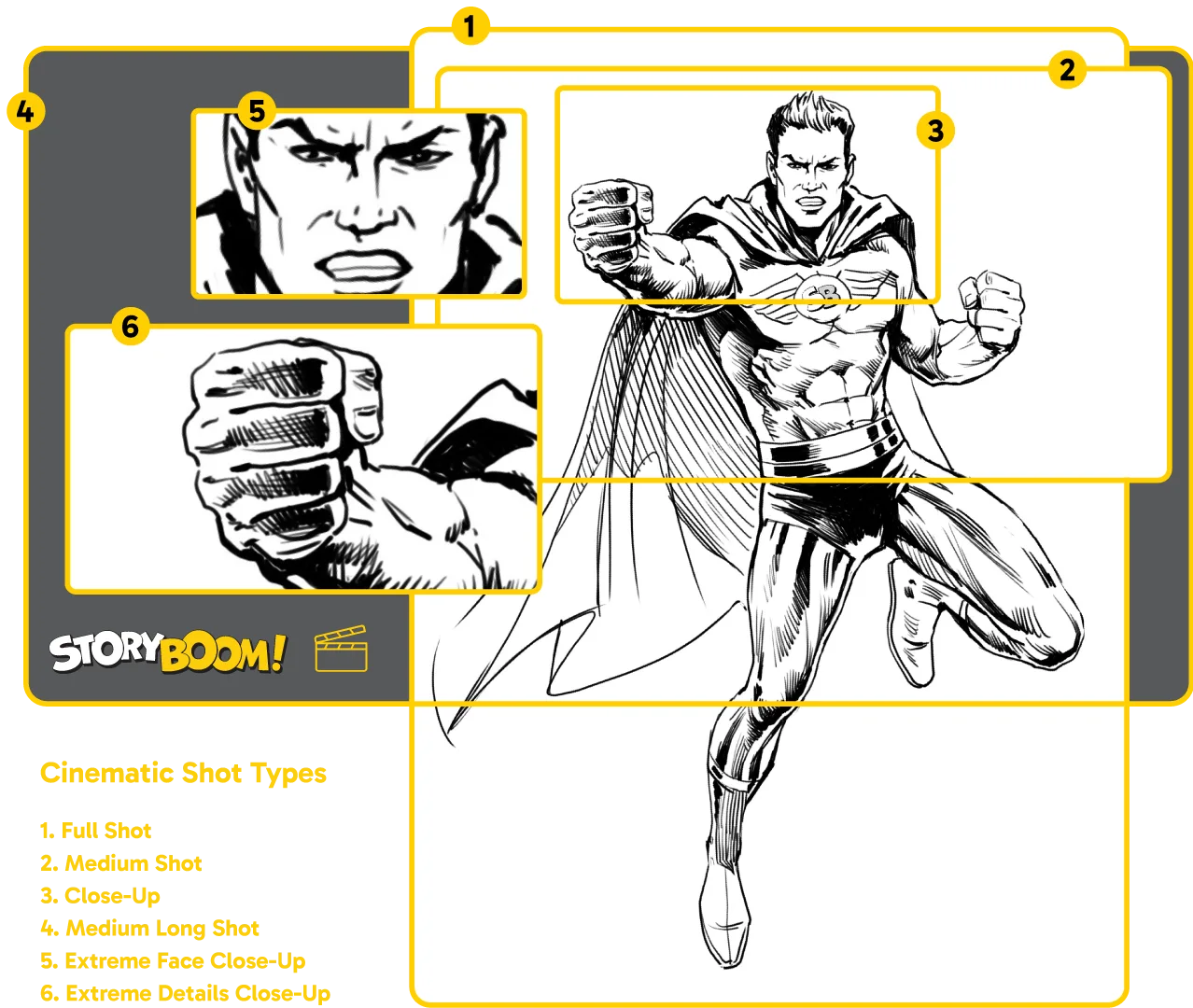
Hollywood helped popularize and standardize these shot types, but it didn’t invent them. The language of cinema was a collaborative international evolution, with contributions from Europe, Latin America, and beyond.
Each shot is an invitation—a way to hold the viewer close or allow them to breathe in the broader scene.
| Spanish Term | English Term | Description & Use |
|---|---|---|
| Plano Detalle | Extreme Close-Up | Focuses on a small detail (e.g., eyes, hands). Used to highlight emotion or clues. |
| Primer Plano | Close-Up | Frames the face and shoulders. Great for showing emotion and character reactions. |
| Primer Primerísimo Plano | Extreme Close-Up of Face | Even tighter than a close-up—just the face. Intensifies emotional connection. |
| Plano Medio | Medium Shot | Frames from the waist up. Balances character and background. Common in dialogue. |
| Plano Americano | Medium Long Shot | Frames from mid-thigh up. Popular in Westerns to show holstered weapons. |
| Plano Entero | Full Shot | Shows the entire body. Useful for action, movement, or spatial context. |
Cinematic shot types are not just technical names—they are dramatic tools that sculpt feeling. The Extreme Close-Up might linger on trembling hands or eyes brimming with fear, making tension palpable. Close-Ups invite the viewer into secrets, dreams, and moments too intimate for words. The Medium Shot holds balance, ensuring we catch connection and chemistry, especially in dialogue-heavy scenes.
Medium Long Shots—once the mainstay of Westerns—let physicality and anticipation build. Full Shots, meanwhile, cast the character against their environment, allowing movement, mood, and scale to take center stage. Each shift in distance is a movement of empathy, rhythm, and deeper meaning.
| Shot Type | Example from Film | Purpose & Impact |
|---|---|---|
| Extreme Close-Up | Requiem for a Dream — pupil dilation shots | Emphasizes obsession and psychological intensity. |
| Close-Up | The Silence of the Lambs — Clarice and Hannibal’s face-offs | Builds tension and emotional intimacy. |
| Extreme Close-Up of Face | Black Swan — Nina’s breakdown moments | Captures raw emotion and psychological unraveling. |
| Medium Shot | The Social Network — dialogue scenes between Zuckerberg and Eduardo | Balances character emotion with context. |
| Medium Long Shot | Pulp Fiction — Jules and Vincent in the apartment | Shows body language and weapons, adds dramatic flair. |
| Full Shot | The Matrix — Neo dodging bullets in slow motion | Highlights full-body movement and action choreography. |
The power of cinematic framing lies in its geometry:
Each choice is deliberate—crafting mood and guiding attention with subtle precision.
Mastering shot types is not merely a technical craft—it’s an art form that paints emotion onto the screen. Each frame is a deliberate choice, a silent conversation with the viewer. A close-up captures raw vulnerability, pulling the audience into a character’s heart. A full shot conveys power or solitude, placing the viewer at a distance to reflect. An extreme close-up, bold and rare, unveils symbolism or shocks with sudden intimacy.
These choices, woven together, create more than rhythm—they forge the emotional pulse of a film. Every shot is an opportunity to deepen connection, shift perspective, or leave a lasting echo. In the hands of a skilled storyteller, these frames transform a story into an unforgettable journey, lingering long after the screen fades to black.

Stay connected—follow StoryBoom on X or LinkedIn
Back to Blog