
Professional Storyboarding: Why Structure Matters More Than Features
May 24, 2026
May 24, 2026
When people hear the phrase “professional storyboarding tools,” it often sounds like marketing language. But in practice, it points to something very specific: tools designed for creators who already understand the production process and need clarity, control, and structure—not shortcuts.
StoryBoom was built around that idea.
From the very beginning, we realized that the most important feature in any storyboard tool is simple, flexible scene management. Not effects, not drawing tools, not automation—just the ability to clearly organize and adjust a story as it evolves.
Because that is how stories really develop.
When you start building a storyboard, your ideas begin to expand. A simple sequence turns into something more detailed. New connections appear. Scenes shift. The story starts to “bloom” beyond the original script. If your tool gets in the way at that moment, the creative process slows down.
Professional tools remove that friction.
They focus on essentials:
At the same time, they avoid unnecessary layers. StoryBoom does not try to replace drawing software or automate creative decisions. It is not based on templates or one-click solutions. Instead, it gives creators full manual control—because storytelling is a craft, not a preset.
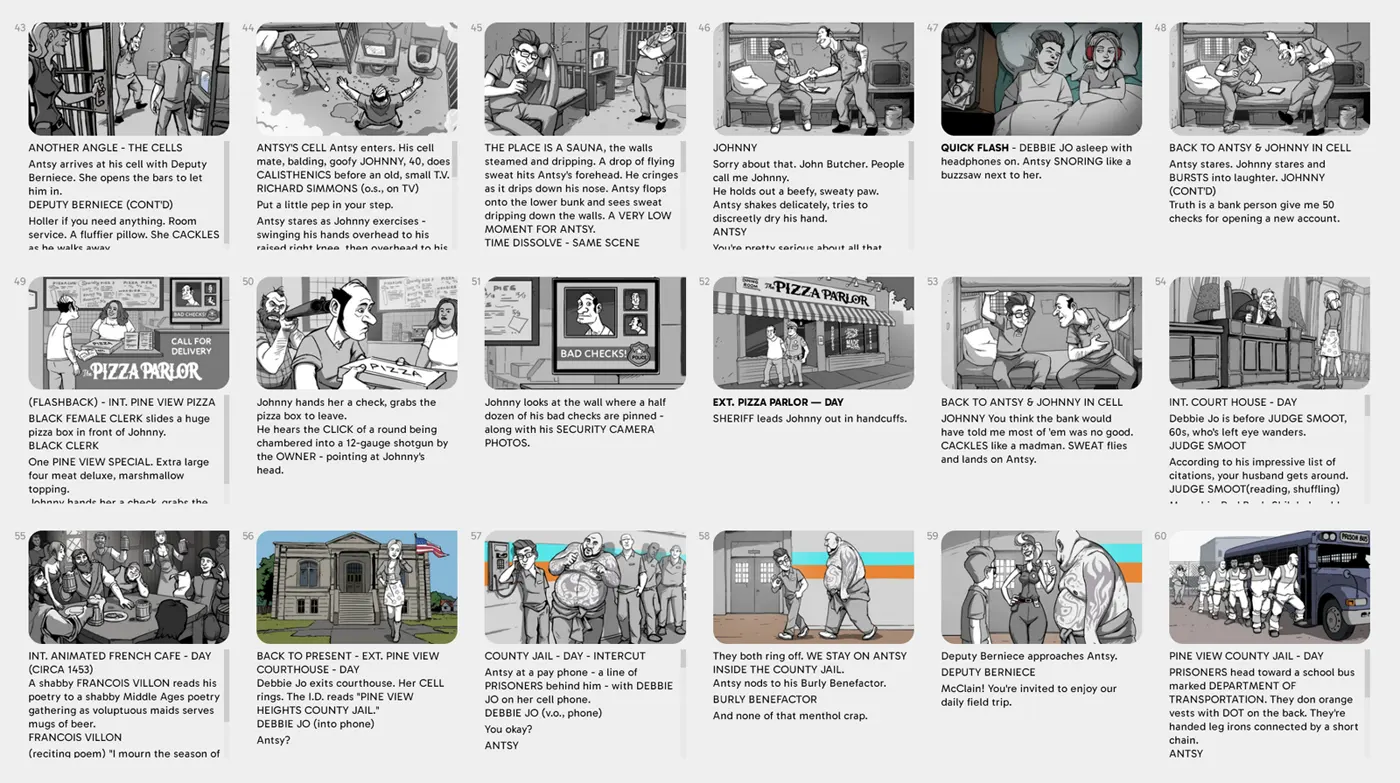
Real Storyboard Example: Way Cool World, animated series
Modern creative tools are increasingly moving to the browser. That shift brings real advantages: accessibility, collaboration, and flexibility across devices. But it also creates a risk—tools becoming too automated, too simplified, or too generic.
Professional creators need the opposite.
They need tools they can trust:
Just a clean environment where they can bring their own visuals, structure their story, and refine it with precision.
StoryBoom is designed as that environment—an empty canvas that you take control of.
A storyboard is not created in one step. It evolves through a process.
It usually begins with a script. The writer defines the narrative—characters, scenes, and pacing. At this stage, the story exists, but only in text.
Next, the script is translated into structured scenes inside a storyboard tool. This is where clarity begins. Each moment becomes visible, organized, and ready for interpretation.
Then the storyboard artist steps in. Using drawings or imported visuals, they bring form to the narrative. These visuals are not final—they are functional. They guide timing, composition, and flow.
At this point, something important happens: the story becomes visible to the entire team.
Writers start to see gaps or opportunities. Directors adjust pacing. Scenes are reordered, expanded, or removed. What was once linear text becomes a flexible visual system.
Through multiple iterations—refinement, feedback, and collaboration—the storyboard matures. It moves from rough sketches to a structured blueprint that guides production.
A strong storyboard reduces misunderstandings, aligns teams, and saves time during execution. It becomes the shared language of the project.
When a project grows to dozens or hundreds of scenes, organization becomes critical.
A storyboard is essentially a visual sequence—similar to a comic strip—but with much greater flexibility. You need to:
One of the most practical (and often overlooked) features is layout control—how many frames you see per row, and how easily you can scan the narrative.
This directly affects how well you understand your own story.
The goal is simple: spend less time managing the tool, and more time understanding the story.
There is a common expectation today that creative tools should deliver instant results. But storytelling does not work that way.
There is no “magic button” for a strong narrative.
Professional tools reflect that reality. They are built for people who are willing to put in the work—people who refine, iterate, and collaborate to achieve a result.
StoryBoom is designed with that mindset: created by storytellers, for storytellers.
StoryBoom is a cloud-based storyboard tool built to support filmmakers, writers, and creative teams in pre-production.
Today, the platform focuses on:
We intentionally keep the tool focused—so you can concentrate on storytelling, not software.
Our pricing model follows the same philosophy.
The Free Starter Plan includes:
As projects grow, users can expand their plan using a flexible pricing calculator—adding only what they need, without committing to unnecessary tiers.
Our mission is simple: cut costs, not creativity.
Storyboarding remains one of the most important steps in any production.
It is the visual blueprint that helps teams:
Without it, even strong ideas can become fragmented. With it, the entire team moves in the same direction.
StoryBoom exists to support that process—by giving professionals the structure, control, and clarity they need to build better stories.

Stay connected—follow StoryBoom on X or LinkedIn
Back to Blog